There once was a fine dog named Graham. Properly, Sir Graham of Cracker. He was a handsome English Pointer, at least for the most part.
Because Graham was, in truth, alone in the world. He had been lost, as a puppy, and had to get along on his own. He had not found a true home until he found The Coopers.
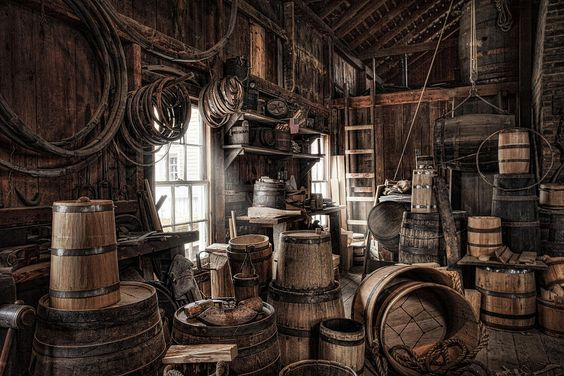
The Coopers lived near a small town in a western part of The Kingdom. The father made barrels. That's what a Cooper does - they work in wood and iron and build barrels of all kinds that can be used for storing food and wine and even water. The father, Zachary the Cooper, was teaching his two young children the art and craft of barrel building, and they all tended the animals and crops they grew.
The eldest child, Carly, with her lustrous brown hair and blue-green eyes, was a very studious and artistic young girl of nine. She liked to make up tales, and drew beautiful pictures to illustrate her stories. While her stories were full of horses and sea creatures and magical ladies and brave adventurers, her brother, Kingman, a bright and shining blonde boy two years younger, introduced dragons and flying machines and robots to her narratives. All the other children from The Grapevine would gather together on the Day Off - one day at the end of each week when children were free to play - and insist that Carly read her stories to them. Kingman would sometimes act out a battle, or show off one of his small flying machines or robot models. Soon the younger boys and girls would be busy on a field of battle drawn on the sandy ground, and the older children would be gathered around Carly, calling out ideas to her, or introducing a new character for her next chapter.

But back to Graham.
One Day Off afternoon, little Graham - then still a puppy - limped toward the circle of children as they sat around the Spring and Creek deep in a wooded patch near The Grapevine. The children liked to gather there as it was pleasant and cool in the hottest days, and they could retreat to the Cave of the Spring nearby if the weather was cold or rainy, and build a small fire to light the space and keep them warm.
Little Graham stood outside the circle at first, and nobody noticed him. He was still a small puppy, and very quiet. He didn't want to frighten anyone, and was himself afraid they might chase him off as another had done before. All he wanted was a place to lie down, something to eat, and a family to care for.

Carly looked up from her reading to glance at the other children, and she spotted Graham. He cowered slightly. He knew he had been seen, and he wasn't sure whether he would be welcome or not.
Just as Carly was about to call out "Hello," Kingman glanced up from his battle and spotted Graham, too.
"Hey," shouted Kingman. as it always seemed better to shout than to whisper to Kingman. He wanted to be sure he had been heard. "Hey, look at the dog!"
Everyone at the Spring and Creek looked up and spotted the white puppy with the freckles and white eyelashes. Carly said, "Quiet, everyone!" She looked into the puppy's eyes, and his tail wagged, ever so slightly. "The puppy is scared, I think."
The children naturally listened when Carly spoke. If her brother Kingman was the Guard, Carly was no doubt the Lady. The children froze for a moment, and Carly gracefully rose and moved quietly to where Graham was crouched, his head low near the ground and his tail between his legs. He whined, ever so slightly, and his little legs shook a little as he tried to remain brave.
Kingman was obediently quiet, but he couldn't remain still. He hopped up and approached Graham quickly with a bright smile on his face. "Hello!" Kingman said, in a happy and friendly voice. For if there was one thing Kingman was, it was charming. He liked most everyone, but in particular he liked dogs. As Carly moved slowly toward Graham, her voice soft and soothing and her eyes shining with delight at meeting the puppy, Kingman was busy crouching down to meet Graham's eyes and he reached out to pet the dog. Graham crouched lower still, not sure whether he would be stroked or hit - he wanted desperately to be liked, but he had been disappointed so many times he had almost lost hope.
When Kingman touched his soft fur, the puppy yipped and his belly hit the sandy soil. Kingman wasn't deterred. He gently touched the puppy's head - his father had told him that dogs and horses should be gently but firmly told who was in charge by touching their heads - and then they should be petted and reassured with a friendly voice and a steady look in their eyes. Kingman did all of that, and within moments, Graham was smiling a Grahamish smile, and turning his face up into Kingman's palm in delight.
Was it possible, thought Graham? Did this boy actually like him?
The children all watched as Carly reached Graham, knelt down next to him, and said, "Who's little dog are you?" And Graham rolled over and begged her to tickle his belly as he smiled a puppy smile of delight.
************************************
The children approached their home at the edge of The Grapevine, walking through a glade of trees that followed the path of The Creek. The Creek ran by their home, and served to cool their milk, provide fish, and Zachary had enlarged a natural deep hole in it to make a swimming hole for very hot days. The sound of the water running sang to the children at night to put them to sleep, and splashed merrily in the mornings to wake them as the sun rose.
Graham didn't yet know his name was Graham, nor did anyone else. That's because no one had adopted him and given him a name. Right now, he was trailing behind Carly and Kingman as they walked slowly home and discussed how to explain the puppy to their father.

Zachary had a rule: ask permission. It was simple, except in an emergency, anything you couldn't do for yourself, that made you late, or that needed the help of an adult, you asked permission. He rarely said no, but he wanted you to understand that you didn't take on jobs or responsibilities for other people, especially your father. If you wanted to bring Mrs. Murphy's mail to her from the mailbox by the road, that was ok, as long as you didn't plan to stay and visit. If her floor needed sweeping and was going to take a while, you politely said you had to tell your father, and would be right back. In The Grapevine, people were happy to help each other when they could. Mrs. Murphy was old, and had a bad leg, so Zachary and the children helped her out with chores whenever she needed. In return, Mrs. Murphy kept them supplied with cookies and stories about The Grapevine in The Old Days.
But a puppy was something new. The children had asked their father about a dog, but he had always said, "We'll see. A dog is a Responsibility."
"We can do it!" insisted Kingman, dancing sideways and hopping up and down in excitement. He already had big plans for what he and the puppy could play together.
"But we can't just surprise Daddy," Carly explained patiently. "You know he likes to be warned about things. And he never said yes to a dog yet." She had a stick in her hand, and she was poking the soft ground ahead of her thoughtfully, and glancing back to be sure the puppy continued to follow them as they headed home.
"But daddy will love him!" shouted Kingman, and he ran back to crouch down and pet Graham, who rewarded him with a wiggly lick to the face.
Carly stopped and looked back. Graham met her eyes, his brow wrinkled with worry. She went back and crouched down by him, too, and both children covered his little back and head with pats and scratches and kisses. He was so excited he finally rolled over on his back, his four paws in the air and his pink little belly begging for a rub.
"You're right," Carly said, finally.
"I am?" said Kingman, in disbelief.
"For once," she teased, and they both laughed.
"Yes," she continued. "The best thing to do is to just tell him. Daddy will see him, and he'll understand. I just know it."
*******************************************
The children opened the gate of the picket fence that wrapped around their house, barn, and the barrel shop, where Zachary spent some of each day creating his beautiful barrels.
You might not think that building a barrel was very exciting - and probably, it wasn't. But it was important, and it took many kinds of skills, and barrels themselves are very useful things. Barrels are containers - and they can store everything from crackers and flour to wine, beer, and pickles. And honey, water, oil, and many other useful things. And barrels have all sorts of names that are fun to say - like hogsheads, firkins, kilderkins and tuns. Mostly what they're called depends on the size. But some barrels are named by their shape and use. Zachary could make them all - and people from even far away from The Grapevine would come to him and ask him to build their barrels, because they were strong, sturdy, and some of them even beautiful.

When he wasn't in his workshop bending staves or cutting hoops, he spent many hours growing crops and tending the cows, sheep, chickens, and pigs that the family relied on for the food they didn't purchase with the money they earned building barrels. The children had time to play, but they also had chores that Daddy had them do each day - cleaning up the house, feeding the chickens and collecting eggs, and of course they spent some of most days reading and writing and doing arithmetic. It was a busy life!
When Carly and Kingman entered the gate, they turned to look at the puppy, who had suddenly sat down outside the fence, looking up at them in a most worried way.
"Come on, fella," called Kingman, slapping his leg gently to let the puppy know he was to come to his new friend.
"I think he's waiting for us to tell Daddy," said Carly. "He knows he has to be invited in by Daddy," she added, slightly surprised that the puppy was so smart.
Kingman, being Kingman, didn't wait, but ran to the barrel shop where he could hear Daddy hammering something metal. To make a standard barrel, you cut the staves - the long wooden pieces that formed the body of the barrel, then fitted them into two metal hoops near the top, and hammered the hoops so that they fit at tightly around the staves as possible. The next step is heating the wood so that it bends. It's complicated, and Carly and Kingman were just learning the first steps.
"Daddy!" Kingman called, as loudly as he could - which was quite loud - to be hear over the sound of Daddy's hammer. "Dad!"
The rhythmic sound of the hammer stopped.
"What you need, big guy?" Daddy said, smiling at the excited boy.
Carly ran in behind Kingman and spoke up. "We have someone we want you to meet."
"You do huh? Who is it?" Daddy put his hammer down and picked up a rag to wipe his hands.
"Out here, over by the gate! He's so nice, Dad, and we want to keep him!" Kingman said, hopping up and down and grabbing his father by the hand.
"Keep him?" Daddy said, looking surprised and bewildered.
"Come on, Daddy," said Carly, patiently. "I think you'll want to invite him to dinner," she added, smiling a Carly smile, her eyes bright and with a knowing twinkle.
***********************************
Outside the gate, Graham fretted.
He walked first one way, then the other, then sat, trying to look relaxed, but his brow was furrowed and his eyes were worried.
Graham had been born, along with his two brothers, in an old barn owned by the Old Man and the Old Woman. Every day, the Old Woman would come out and share table scraps with Graham's mother, and then when they were weaned, with the pups and their mother.

One day, the Old Woman didn't come out with the usual plate of food for the dogs. The mother dog waited all that night and into the next day, and finally after another hungry night, she indicated by pointing her nose, sniffing, and tapping her pups gently that they were to remain curled up cozily in the old hay.
A little while later, she returned, and she looked sad. The next morning, she roused her puppies and they set off down the road, away from the house where the Old Man and Old Woman lived. No smoke curled from the chimney, and no lights shone in the windows.
When it began to rain later that evening, the mother dog and her pups trudged along for a while, on the now-muddy road that led toward The Grapevine. When the rain got too hard, they scurried around looking for a friendly cave, or old barn to hide in. When the mother found a hollow log, she urged her puppies into it. As they curled up together, tryin to stay warm, Graham could smell damp wood, moss, a weasel who had sheltered there, and the smell of blossoms on the trees. It was spring in The Kingdom.
The next morning, they started out again. As they headed through the woods, seeking out the road, they came across a man clearing up the remains of his breakfast, and packing up his small wagon. The man smiled when he saw the little family. "Why, hello there," he said, bending down and gently patting the mother dog on her nose. "That's a nice looking family you've got. Are you hungry?"
He hunted about and found some bits of beef and beans that he'd had for his breakfast, and share the bites with the dogs. They all ate hungrily, and then darted back and forth, rubbing their sides against his pants legs, smiling doggy smiles, and wagging their tails as hard as they could.
The man laughed, and the eldest pup looked him straight in the eye.
"Well, you're a fine fella, ain't ya?" he said. The puppy was white with beautiful brown spots and two huge brown eyes. "I'd like to keep you with me for company. You could help me hunt and warn me about robbers on the road. Would that be alright with you?" he asked the mother dog, who licked his hand and smiled a doggy smile. He patted the puppy, and added, "I can't keep you all, I wouldn't be able to feed you. But maybe I can find another home for you, too. I've got a job just down the road."
The man attached his wagon to the harness on his small mule, who stood patiently waiting. The wagon was full of his supplies for camping as he traveled, and tools of all sorts used for sharpening knives. He spent his days traveling the roads that snaked across The Kingdom, stopping to sharpen the knives of the housewives, farmers, and shops that needed his services. His name was Mr. Sharp.

When they reached the location of his next job, they saw a big, beautiful white house, with a porch that wrapped around it on three sides. When he pulled his wagon near the kitchen door, a pretty woman came out, drying her hands on her apron.
"Why Mr. Sharp," she said, in a soft and musical voice. "You're just on time! I have a drawerful of knives that need your help." Then she paused and looked at the little family of dogs. "New friends, I see, Mr. Sharp," she said, bending down and holding her hand out. The second oldest puppy ran to her, his tail wagging furiously. Just then the screen door slammed open, and a young boy of perhaps 5or 6 hobbled out, using a crutch to help him walk.
"Come here and see the puppies, Ethan," his mother called.
Ethan made his way self-consciously down the steps, and the puppy bounded over to him, bouncing in delight. Ethan laughed, dropped his crutch, and carefully knelt down on his good knee to pet the excited puppy. His mother watched for a moment, and then, her eyes twinkling, she looked at Mr. Sharp. "Does that puppy need a home?" she asked. Mr. Sharp looked thoughtful, and rubbed his finger along his chin, as if giving the idea careful consideration. "Well, I suppose I could part with that one, if you think young Ethan will take good care of him?"
"Ethan," called the boy's mother. "Do you think you'd like to keep that puppy?"
"Can I? asked the boy, looking surprised and delighted. "Can I really, mom?"
"Do you promise to take good care of him, and train him to go out and not beg at the table?"
The boy nodded, and expression of wonder still on his face.
"Well then, I think we have a new puppy," his mother laughed. "What do you think you'll call him?"
"I'm not sure," the boy said slowly. "Should we have him meet dad first?"
"That's a wonderful idea, Ethan," said his mother. "Well now, Mr. Sharp, let's get you some lunch, and then I'll pull out all my knives - and my husband has a few tools in the barn he asked me to remind you about. And maybe I can find a little something for the dogs, too."
Mr. Sharp turned and smiled at the mother dog and her two pups. "Two have homes, two to go," he said to the mother dog, who licked and nudged her one remaining puppy - Graham.
***********************************************
The mother dog, her remaining puppy, and Mr. Sharp and his new puppy, Eli, had been on the road for a few days when they reached the home of the school master, Mr. Mathers. He was a very kind man, tall and thin and always seemed to have a book in his hand. He lived alone in a small cabin near the school house that served the children of The Grapevine. The Grapevine had two schools, one for younger children and one for the older children, though sometimes Mr. Mathers and Miss Storey, the school mistress at the advanced students' school - exchanged visits to one another's schools. Mr. Mathers was very orderly, and excelled at math and public speaking, and Miss Storey enjoyed helping the children with their reading and learning about history and geography.
Mr. Mathers, just as expected, was sitting on the porch of his cabin reading a thick book when Mr. Sharp called out to him, pulling his mule to a halt, and approaching the porch.
"Mr. Sharp," said Mr. Mathers with a friendly smile. "So good to see you! I was hoping you'd stop by. My best kitchen knife is quite dull, and the saw could use a little polish."
"Of course, I'd never miss a chance to say hello," said Mr. Sharp. He beckoned to the dogs, who, now used to Mr. Sharp, trotted over and lined up next to Mr. Sharp, looking attentive. "Meet my new friends. This one," he nodded towards Eli, "is my new pup, Eli. This one here is his mama, and that one needs a home."
Mr. Mathers looked intently at the three dogs, all shades of white with brown patches, long thin tails, and big brown eyes. "Well, hello there," he said, and the dogs wagged their tails. They knew by now that anyone Mr. Sharp knew was probably going to be a friend. "I was just going in for supper. Why don't you camp here in the yard by the creek, and join me for supper? I'll be up early, though. School starts promptly at seven."
"Thank you, Mr. Mathers. I'd be pleased to. I'll go set up camp and be in shortly." Mr. Sharp turn to grab the mule's halter, and winked at the dogs as if to say, "Guess we have another home!"
When he left the next day, after sharpening Mr. Mather's knives and saw, Mr. Sharp said goodbye to the mother dog and her last remaining pup. Mr. Mathers said he was lonely when school wasn't in session, and could use the company of the two dogs, so he decided he'd keep the mother dog and her pup. The dogs were nervous and anxious when they could see Mr. Sharp getting ready to go, but they realized Mr. Mathers was a kind man, if not quite as talkative as Mr. Sharp. They gathered in a group, licking Eli's nose and whining a little, knowing they were saying goodbye.
"It's all right," said Mr. Sharp. "I'll be back this way about a year from now, and I suppose you'll be all grown up by then, won't you little fella?" He bent down and scratched Graham behind the ears and under his chin. The mother dog licked Mr. Sharp's hand, and kept glancing up at him as if to say, "Thank you, thank you!" Eli kept close to Mr. Sharp, and when the time finally came to say goodbye, Eli sniffed his brother and mother one final time, and then trotted off proudly next to Mr. Sharp's wagon.
*******************************************
It was when Mr. Mathers was asking Graham's mother to "Fetch!" that Graham disappeared. Mr. Mathers and Miss Storey had been enjoying some tea and a pleasant conversation on the small porch of his cabin, and discussing the Wars of the Roman Legion - a period in history long ago, and far away in the Old Kingdom, across The Mighty Atlantean Sea. It was a particular interest to both of them, and they would often read passages from ancient books, and discuss the years the legionaries would spend camped outside a castle or a fortress, fighting skirmishes with raiders, and trading insults with the people in the castle. Mr. Mathers had recently become interested in their leather work - it seemed the fighting men would wear leather garments inside their armor to keep the metal from scratching their skin, and Mr. Mathers wondered how they could fight battles if they were wearing so many layers of clothing, especially when they were in hotter climates.
When Miss Storey left to ride home to her small house on the other side of the school (she always rode her lovely roan horse Bella when she visited), Mr. Mathers got up to stretch his legs and see how well the dogs did fetching sticks. "I could use one of those leather gloves," laughed Mr. Mathers, looking down at his hand, nicked and scratched from doing work in his garden. Then he tossed a stick, and called out, "Fetch!"

Graham was just running toward the stick that Mr. Mathers had thrown, and everything around him changed. It was as though he had jumped into a hole - and one moment he was in Mr. Mather's shady side yard, The Creek tumbling happily over the rocks, and squirrels busily chattering at the dogs - and then next moment Graham found himself next to a boiling kettle over an open fire, and a clutch of men, all of them big and wearing armor, standing around it laughing. It was dark, or close to it, and none of the big men noticed a small dog suddenly popping into sight.
Graham quickly looked for a place to hide, and saw several big white tents surrounding the fire, the kettle, and the huge, laughing men. He scurried to the nearest one and darted into the opening without thinking. Once inside, he froze. There, at a sort of table, sat two more men. These two weren't wearing armor, but long robes. Small lamps hung from poles, casting a dim light inside the tent, and the two men were intently studying a parchment on the table in front of them. They didn't notice a small white dog who slunk under a cot that stood near one side of the tent. There were curved chairs, baskets and leather boxes, and strange objects Graham had never seen in his young life. He tried to make himself as small as possible, and stay deep in the shadows under the cot, which was covered in furs. The two men were talking, but Graham didn't understand them. He settled in, staying small and quiet, to wait.

When he woke up, it was bright and sunny, and the tent was empty of people. Graham made his way carefully out from under the cot, ready to dash back into hiding if anyone saw him. He peeked out of the flap of the tent, and saw men gathered around the same fire, this time eating hungrily, and drinking from horned mugs. Graham realized with a pang of hunger that he hadn't eaten in a while, and he wondered if any of these men would drop a scrap of food that he could catch.
Now that he could see, Graham realized that the camp wasn't just a few tents and men, but that it was a huge field full of tents, men, cook fires, pennants flying in the sky (though he had no idea what they were or why they were there), and that the men all carried sharp tools that looked something like what Mr. Sharp worked on when he worked - but much, much bigger, and a little frightening looking.
As Graham snuck around from hiding spot to hiding spot, he could see that the men were finishing up their food and drink, and beginning to draw on heavy pieces of what looked to him like metal clothes. He'd watched Mr. Sharp dressing in the mornings, and he was awfully glad a puppy didn't need to bother as it seemed like a silly thing to do - but Mr. Sharp's clothing was soft and smelled like... well, it smelled like Mr. Sharp, and wood fires, meat and bread, and the longer the dogs were with him, a little like them, as well. These clothes smelled like Mr. Sharp's tools - a kind of a hard smell, like it wouldn't taste very good and would be hard to chew. He could also smell something that smelled like the barn he'd lived in for a while, and sort of like Cynthia, Mr. Sharp's mule.
By now the men were clanking around the camp, and shouting at one another, and he could hear the sound of something yelling, or crying, or shouting in a strange voice, as if the men's metal clothes could shout. Just then, one of the men dropped a piece of bread that had been soaked in the juice of meat - and before he realized what he was doing, Graham darted out and grabbed it. He was very, very hungry. And just as he did, one of the men spotted him. He yelled, "Hey there, hound!" and tossed a leather glove towards Graham. The little white dog jumped in fright, dropping his bit of bread and catching the leather glove in his mouth. "Drop it!" the man shouted - and as he did, Graham leapt into a hole that hadn't been there a second ago. And he disappeared.
****************************************************
Graham found himself by the banks of a tumbling creek, holding a big leather glove in his mouth, and having no idea where he was, or how he'd gotten there. He dropped the glove and slid down the bank of the creek til he was near a spot where the water was trapped by some rocks, and he could bend down and get a drink. After he'd filled up on water, he studied the woods around him, but didn't recognize a thing. All he had was a glove, and his nose, so he picked up the big leather object and trotted off in the direction of something that smelled like Mr. Sharp, Ethan and his mother, and even a little like Mr. Mathers.
By the time the sun was setting, he found himself outside a small cabin. It was very shabby, and there was no barn or other animals about. There wasn't much light coming from the windows, but he could smell a wood fire, and saw smoke curling up from a half-built chimney.
He padded back and forth, trying to make up his mind whether to go up to the door and see if there was a friend inside, or find a place to sleep outside. Finally, his hunger got the better of him, and he inched his way toward the small stoop, dragging his one treasure with him. Just as he set the glove down so he could hop up the step toward the door, it opened inward, and a small man with a grey beard and threadbare overalls looked out.
"Who's there?" the man roared, trying to sound fierce. But his voice wasn't very loud, so Graham felt it was probably safe to say hello.
He sat up, and wagged his tail, and gave a little yip.
"Who? What?" the man said, looking around, until it finally occurred to him to look down. And then he spotted the puppy. "Who's this? What are you looking for? You stay away from my traps, you hear me? Just like you to go stealing my supper!" the old man bent over and pulled off one scruffy looking boot, then stood and cocked his arm back, ready to throw.
Graham stepped back carefully, and carefully picked up his glove.
"What you got there? You take something from me?" said the old man, threatening Graham with his boot. Graham dragged the glove further away, finally picking it up and getting ready to run. Just as he had turned so he could flee, the man's heavy boot slipper was thrown - and it was a mighty throw for such a small old man - and as Graham was darting away, the boot caught him on his rear paw with a "thwack!" Graham tightened his jaws around his glove and ran - now with a limp - and disappeared into the woods.
***************************************
Graham spent the night, lonely and hungry, under a sweet-smelling bush, and listening to the gentle sound of the creek nearby. He decided to stay near the creek, as he could always take a drink when he needed one, and maybe it led somewhere safe and good. Or even, maybe, he would find Mr. Mathers and his mother.
In the morning, he woke to the sound of voices. They were giggling, shouting, sweet, loud voices - not like any he had heard before. They sounded more like puppies, he realized. He peeked carefully out from under his bush and saw color and movement and bright and dark - it was the children, playing and running and tumbling and tossing rocks, and engaged in what looked like the best fun Graham had ever seen. He almost darted from under the cover of the bush when he remember the slipper hitting his leg, and cowered back a little.
After a bit, some of the children gathered around one particularly pretty girl who was sitting on a rock with a book in her hands. She was wearing a lovely purple dress - though Graham didn't really understand except that it looked bright and shining and very happy. She began to read the book, her voice was soft and sweet and kind.
Graham began to creep along behind the bushes that followed a path the led toward the little clearing where the girl and her friends were sitting. After a bit, some of the boys, including one boy with bright blonde hair and a big, shining smile, began to push one another, draw pictures in the sandy soil with sticks and tagging one another and running. Some of the girls and the older boys stayed, watching the pretty girl with attention. To Graham, it seemed like it might be safe.
He crept nearer, and nearer, and suddenly, the pretty girl looked up from her book. She sent Graham the kindest and sweetest look he had ever seen, even when compared to his mother or Mr. Sharp. She opened her mouth and he was sure she was going to speak to him.
"Hey," shouted the blonde boy. "Hey, look at the dog!"
And now, Graham waited outside the gate at the home of the children, to see what their father would say.
***************************
When Zachary, Carly, and Kingman reached the gate to their property, Graham was nowhere to be seen. Kingman was hopping up and down with excitement, but his face fell when he didn't see the puppy where he'd been left.
"He's gone," the boy shouted, looking terribly worried. "He left us!"
"No, he's here," Carly said, patiently. "He's just nervous."
She walked slowly out the gate, motioning Daddy and Kingman to follow. She looked around, and saw a flash of white among some bushes near the bank of The Creek.
"Hello?" she said softly. "Hello, puppy? Where are you?"
She walked slowly toward what she knew had to be the puppy, and saw the bushes shivering, though there was no wind on the late spring day. When she reached the spot where she'd seen the white through the bushes, she knelt down and began to speak quietly. Daddy and even Kingman stayed quiet, too, and hunkered down near Carly. "Is that him?" whispered Kingman. Carly nodded.
"Come here, puppy," she said, coaxingly. "It's ok. We want you to meet Daddy."
From the bushes they all could hear a little whimpering sound, and as Carly kept calling to him, they finally saw the little black nose and white snout of the puppy. Soon they saw two very worried eyes, looking up at them from where the puppy was crouched, his head on his paws.
Zachary smiled, and gently said, "So this is the surprise. Hi there, little guy," he spoke very softly, too.
The puppy crawled a little further out. Kingman reached out to pet the dog's nose, and the puppy ducked his head a little, but bravely waited for either a knock on the head, or, he hoped, a gentle petting. Kingman lay down on the sandy ground so he was eye to eye with the little dog, and ruffled his ears, and smiled. "See, it's ok!" Then he turned to Daddy. "Can we keep him, Dad? He's a nice dog. He really is!"
Daddy looked at the puppy, who now faced the big man with wide open eyes. "Come here, little guy," Daddy said. And just like that, the puppy walked bravely out from under the bushes, and over to Zachary's outstretched hand.
After a little wriggling with delight when Zachary petted the puppy, and scratched behind his ears and finally gave him a nice belly rub, Zach looked at his two children, who were smiling brightly.
"I guess we have a dog," said Daddy. "But what's his name?"
*****************************************88
The answer came when Graham, not meaning to do it at all, knocked over a barrel of graham flour. Once the little family had made its way back to the house, the puppy excitedly exploring every corner of the path from the gate to the house, Daddy told the children they'd have a lot of work to do to get the dog trained to behave in the house.
"Of course, we could just have him sleep in the barn, or the workshop, or even here on the porch," Daddy said.
"Oh, noooo, Dad!" Kingman said, looking truly distressed. "He has to come and sit by the fire when it's cold, and he can't leave him out in the rain!"
"Yeah, Daddy," said Carly, petting the little animal as he poked around the furniture, books, carving work, some of Kingman's buildings and Carly's art work - and of course, as he sniffed around the kitchen. "He's got to be part of the family."
Just then, a piece of wood that Daddy had been shaping into a lid for a barrel fell over with a bang! The puppy jumped away in surprise, and knocked into the kitchen table leg, and as he did, a small keg of graham flour that was sitting on it fell over with a thud. It rolled to a stop, fortunately before it fell to the floor, but dusting the table and the dog with graham flour. Daddy liked to make crackers and breads with it, as it was hearty and healthy, and everyone seemed to enjoy it.
The puppy stood under the table, looking very shamed and distressed, his back and nose covered with what looked like thousands of freckles - but were really bits of the flour, which is a coarsely ground wheat flour that hasn't had the bran or husks or germ sifted out, as millers do with white flour.
"Well," Daddy said, smiling down at the chagrined puppy, "I think he has a name."
"What?" Carly asked.
"Well, Graham, of course," answered Daddy. "I dub thee," he said, getting Kingman's toy knight's sword from its scabbard made of leather, "Sir Graham of..."
"Cracker!" shouted Kingman, raising one arm in the arm and then lowering it to point at Graham.
And so it was that Graham - was Graham.
***************************************888
The next day was Saturday, so the children didn't have school. Graham had been given a blanket to sleep on by the fireplace, and they had all taken turns walking with him outside so that he could learn that outside was where to do his business. Each time they took him out, he kept running toward the gate. The children were very worried that he might want to leave, but when they called him he ran back and happily licked their hands and rubbed up against their legs.
When they went outside in the morning, Graham ran for the gate.
"He must want something," said Carly. "Let's find out. Daddy!" she called. "We're talking Graham out for a walk to The Creek."
Daddy came to the door of his workshop. "All right. Don't be too long. There's chores today, don't forget."
"We won't!"
They ran off, Graham darting as quickly as he could out of the gate. He made straight for the bushes where he had hidden the day before, and disappeared into them in a flash.
"Graham!" Carly called. In seconds, the puppy came back into view, but he was dragging something along with him.
"What's that?" said Kingman.
"It looks like a glove, or sort of like a glove," said Carly. Graham was nibbling at the object, shoving it and dragging it. Carly picked it up, and Graham immediately sat down and stared up at her, whimpering.
"What is it, Graham?" she said. She crouched down and held the glove out to him. He whined a bit and nosed the glove, grabbing it gently in his teeth. "Where did you get this, boy?"
"It looks like a knight's glove," said Kingman. "Like the one in my book."
"It does, doesn't it?" replied Carly. "Let's show Daddy."
They all ran toward the workshop, Graham barking, but not too loudly.
Daddy heard them rushing into the workshop, and he put aside his tools and came over to see what was happening.
"It's a knight's glove!" said Kingman, emphatically. "Graham had it!"
Daddy took the heavy leather object and examined it. "That's beautiful work," he said. "And look here, it's got mail on the knuckles and across the back of the hand." The glove was dark brown leather, and the metal was tarnished but sturdy, and had been attached to the leather with metal rivets. "Where did you get this Graham?" he looked at the dog, who sat attentively watching as Zachary inspected his treasure.
"I don't know anyone nearby who has anything like this. Gloves for riding and work, but not for jousting," Daddy said with a laugh.
"I know how to joust!" Kingman said. "But you have to have a horse."
"Well, yes," Daddy said. "And our horses aren't trained for that."
Kingman grabbed a stick of wood, held it like a lance, and started to run the length of Daddy's shop. "Hey, Kingman, not inside," Daddy said. Kingman stopped and put the stick back.
"But where'd he get this?" Carly said, thoughtfully. "Where did you find it, Graham? Is it old, Daddy?" she turned to her father.
"I'm not sure," he answered. "It doesn't look very old - it looks like it could have been made recently. Something that old - it would be hundreds of years. Someone must have made it recently," he said, thoughtfully.
"I wish I had another one," Kingman said. "And a helmet. And greaves."
"What's a greave?" Carly asked.
"That's the thing the knight wears on his leg to protect him in battle," Kingman said. "I'll show you in my book about King Arthur. Come on. Hey, Graham," he turned to the dog. "Fetch me another glove!"
And just like that, Graham disappeared.
********************************
When the hulking man, who was being helped into his armor by a young boy, saw the little dog who had popped into his tent, he shouted out loud.
The dog froze. His tail dropped to the dusty ground, and his eyes darted around the space for a place to hide.
"Did you see that?" the man growled to his young companion. "Where did the cur come from?"
"I don't know, sir," stammered the boy, taking a step toward the little white dog with brown patches, who was creeping toward a bench on which lay some heavy robes. "Here, dog," he said, taking another step. The dog looked into the boy's face, and saw no danger in his blue eyes. The dog looked wildly around the inside of the tent, spotted what he needed, darted over to grab the heavy leather glove from the ground where it lay, and snatched it up.
"Drop it!" shouted the knight, now furious.
And just like that, the dog disappeared.
*******************************
When Graham reappeared, a glove trailing from his small mouth and whining in fear, the Coopers were sitting at the table eating a forlorn and troubled dinner. They were trying to figure out where the little dog had gone. And there he was - with a glove.
"Graham!" yelled Kingman, darting out of his chair and running to hug the puppy.
Carly was right behind him, her eyes glistening with happy tears as she snuggled her face down into Graham's. The puppy had dropped the glove, and was frantically licking the faces of his two best friends.
Zachary put down his fork, and stared at the dog, then thoughtfully went over and picked up the glove. It was nearly a match to the other mysterious piece of clothing the dog had gone to retrieve soon after they took him in.
Zachary crouched down, and ruffled Graham's ears. "Where did you get this, boy, hmm?" he asked. "Where did you go, little guy?"
He turned the glove over and over in his hands, looking at how it was made, at the leather, and the bits of metal on the knuckles and back.
"Kids," said Daddy, his voice sounding slightly amazed. "I have an idea where this glove came from." He was silent for a moment. And his face took on an expression of wonder. "And I think I have an idea where Graham went."
***************************
When Carly and Kingman got up the next morning, they found Daddy sitting in his big armchair near the fire. He was intently reading a book, and didn't seem to notice them until they stood right in front of him and patted him on the shoulders, one on each shoulder. It took a moment for him to lift his head up from the book he had been lost in.
"Hi, guys," Daddy said, shaking himself a little as he returned from the world of his book. "Time for bed," he added. The children looked at one another for a moment, and then started to laugh.
"Daddy," said Carly, giggling. "It's morning!"
"Oh, my gosh," said Daddy, putting his book aside and rubbing his eyes.
"Did you read all night?" asked Carly. "Daaaady!" She shook her head. "You need breakfast," she added, heading toward the kitchen. "Kingman, feed Graham and the chickens and see if there are any eggs."
"I'll help you, buddy," said Daddy, standing and stretching.
Graham moved slowly, and stopped by the big chair, and sniffed the big, leather bound book Zachary had been reading. He looked up at the man, and sniffed very slightly, then followed the man and boy out the door.
By the time Zachary and Kingman had returned with a few eggs in a basket, Carly had made coffee, and sliced some bread to toast over the kitchen stove. She had set the rough-hewn table, and poured milk from the ice box in two glasses, set neatly on the table. Bacon was frying in a big cast iron skillet on the stove. Graham went over to stand near the girl, who was carefully taking the bacon out of the pan to drain. He watched her intently, and Carly knew he was waiting for the nibbles he somehow knew she and Kingman would share with him at mealtimes.
Soon the family sat down, with a plate of toast, bacon and eggs on a platter. Daddy took a long sip of his coffee, and closed his eyes. "You sure know how to make good coffee, Carly," he said. The girl smiled happily. She enjoyed cooking, almost as much as she enjoyed swimming and riding her horse.
After a few minutes of eating in silence, Daddy set his fork down, and said, "Kids, I've been doing some reading. Remember I said that I maybe knew where Graham got that glove?"
The children nodded. Kingman helped himself to another piece of toast. "My knight's glove?" he asked.
"Yep. So, we're going have to try an experiment," said Zachary, thoughtfully. "Do you know what that is?"
"It's where you test a theory," said Carly, closing her eyes to remember what she had learned at school.
"Right," said Daddy. "But you have to test it carefully, so you can be pretty sure your theory is right or wrong."
"So what do we do," asked Kingman, jumping off his chair and crouching down so he could pet Graham, who was happily licking his paws under the table. Kingman ran into the adjoining room near the big fireplace, and dropped down onto the rag rug, rolling over on his back so the dog could come and snuggle him.
Graham obediently hopped up on the child, but was paying close attention to Zachary.
"Kingman," said Daddy. "Where did your wooden wagon go?"
"You know, Dad," said Kingman. "It broke and we couldn't fix it, so we threw it in the fire."
"Right," said Daddy. "And when was that?"
"Just a little while ago," said Carly. "Yesterday, before dinner."
"How did it break?" asked Daddy.
"I threw it," said Kingman. "I was mad."
"So, I wonder if Graham can find it. I wonder if," Daddy said, looking at the little dog, "Graham can fetch the wagon, bring it to me, and drop it!" Daddy said the last words in a loud, commanding voice. And POP! Graham was gone. A few seconds later, he was back, holding a small wooden wagon in his mouth, looking as surprised as his little family.
The wagon wasn't broken.
***********************************
Graham, looking both surprised and proud, carried the wagon over to Kingman, who took it from him in wonder, and then trotted over to Zachary, who leaned over and picked the little dog up.
"Kids," said Zachary, "I have something to show you."
He went to his big chair by the fireplace, where he put Graham gently on the floor, sat down, and picked up the book he had been reading when the children got up.
"I was reading this book," he explained, showing the old worn leather cover, and opening it to a book-marked spot near the middle of the book. "It tells some of the history of The Kingdom, though it was written a long time ago and there's more to our history now. But one of the stories in here is about animals, dogs and horses, mainly, but sometimes birds as well, can..." he trailed off, looked both children in the eyes, one by one, and continued, "travel in time."
"What?" said Carly, putting her hands on her hips and laughing. "Is this a joke, Daddy?"
"No," he answered. "I have to be honest, I heard stories when I was growing up, some of the older people talked about it. Many of them had seen it, and they even used it sometimes when they needed something from the past, like something they'd lost, or something they wanted to see. But as far as I know, nobody my age ever knew about an animal that could do it. But here's the thing," he paused, took a deep breath, and said, "I think Graham can do it."
*************************************
Kingman carefully put down the wagon, as if it might bite him.
"Dad," he said, in his small voice, reserved for only the most important moments. "Dad, why isn't my wagon broken?"
"Well, that's the thing, buddy," said Daddy. "I'm pretty sure Graham went and got it from before it got broken."
Both children looked at their father with expressions of amazement and, just a little, doubt.
"But you can't go back in time," said Carly. "That's impossible."
"Well," said Daddy, "that's not what this book says." He opened it to the place where he had been reading. "Some animals, notably dogs, upon occasion a horse, and rarely, but it is believed also some birds, can go back upon command to a period of time that has already passed," he read. "These animals are increasingly rare, and often will seek out the solitude of living in the wild, as they often distress their masters with their antics."
"What's an antic?" asked Carly, who generally knew every word she encountered, given that she read so much.
"It's sort of a trick, or a prank," replied Daddy. "Like when you and Kingman try to come up and scare me when I'm busy," he added, with a slightly raised eyebrow and a not very well disguised grin.
"Daddy," Carly said. "We're just being funny. But if your dog goes away to the past, that's a little scary."
"Well," answered her father, "according to what I'm reading, they can only go when they're commanded, and only when the person commanding them has been accepted as their pack leader."
"Pack leader?" said Kingman.
"Dogs are pack animals. And horses live in herds. And some birds flock."
"Oh!" said Carly, excited. "I remember reading about all the names for bunches of animals! Like, a bunch of whales is a pod, and kittens are a kindle. Then there's a creepy one - crows in a group are called a murder." She said this in a low, scary voice, looking at Kingman, who promptly stuck his tongue out at her.
"Hey," said Daddy, who was smiling. "Dogs, when they live without people, will gather together in a pack. And there's usually a pack leader, who lets all the other dogs know what they're going to do - go out hunting, make a den. Make a youngster behave," he looked at Kingman, who giggled. "So often when dogs live with humans, they will become like the pups of the group - and they look at one of the humans as a pack leader, and the others as having some rank over them. So you, Carly, and you Kingman, can tell Graham what to do, and he'll do it. He wants you to like him and accept him."
"Of course we do!" said Carly, going over to give the small dog a hug. "He's the best dog ever!"
She looked down at his face, as the dog glanced from Zachary, to Kingman, to her, a little furrow in his brow, as if he was trying to be sure he hadn't made anyone mad. When Carly began to pet him, he licked her face enthusiastically, and rolled over for a belly rub, his feet dancing in the air above him.
"So, what do we do about it, Daddy?" Carly asked after a few moments.
"I'm not sure," answered Daddy. "Except I think we have to be careful with the word f-e-t-c-h."
"Fe..." said Kingman, sounding it out. Daddy held up a warning hand. "Careful, Kingman. I think that word is the command word for him to go. I'm just not sure how he knows where to go, and when."
***********************************
"Daddy," said Carly, entering the barn where her father was working on a barrel.
"Yes, sweetie," said Daddy, looking up from the barrel staves he was "raising up." Coopers assemble the staves inside a metal hoop that serves as a jig. The "jig," or pattern, assures that each of the staves will be a similar size. This critical process is called "raising up." With all the necessary staves raised up, the hoop is hammered tight and other hoops are added.
"I have an idea about Graham," she said.
"Okay," said Daddy, looking at his daughter. When Carly had an idea, Daddy had learned it was a good idea to listen carefully - because it often meant she had something in mind to do.
"Well, you know how when we say f-e-t-c-h," she spelled the word, carefully, as the dog, when he had heard the work spoken, had disappeared, returning in a bit with items that appeared to be from the past. "And I was reading your book," she continued. There were few books Carly couldn't, or wouldn't, read.
"Well," she continued, sitting on one of Daddy's sawhorses, the book they were speaking about cradled in her arms, with a small slip of paper sticking out of the pages about a quarter of the way from the top. "What were we talking about just before Graham... went where he went?" she said, eyeing the dog carefully, as if he might vanish before their eyes.
Daddy squinted his eyes and looked up, as he often did when he was trying to remember something. "Kingman's broken wagon," he finally said.
"I mean, before that," she said.
"Oh, with the glove? Uh, King Arthur," said Daddy.
"Right," said Carly. "So when you told Graham to f-e-t-c-h you told him what you wanted, right?"
"Right."
"And before that, before you figured out his antic," Carly went on, and Daddy mussed her hair at the word "antic." Zachary liked it when his kids learned new words or ideas. She patted his hand, and smiled. "Well, before that, Kingman said to get him a glove and he was talking about King Arthur!"
She beamed proudly, as if she had unlocked the secret to the puzzle.
She opened the book to her bookmarked page. "Here in this book, Daddy," she said, and began to read, "Some animals can be trained to recover lost objects, and some few have the genuinely unique ability to venture into far distant times, returning to their owners with objects of interest. It is not recommended, as while these animals are rarely injured in their ventures, some have been known to return somewhat altered. Typically, the animal in question is gone for only a short time, com...com...what's this word, Daddy?" she asked, turning the book toward him.
"Sound it out," said Daddy.
"Com-men-sue-rate," she said.
"Close," said Daddy. "Remember how some sounds are changed depending on where they are in the word. So this one is 'commensurate.'
"But I thought that if there was an e at the end of the word the vowel sounded long, so, rayt not rit?"
"That's usually true, you're right. But some words are old, and have gone through a lot of pronunciation changes. But you were following the rules just right."
"What does it mean?"
"It means 'in keeping with,'" replied Daddy. "You know how you and Kingman wear smaller shoes than I do? That's commensurate with our ages."
"Yep," said Carly.
Kingman had been listening quietly, and his patience was almost exhausted. "Let me see," he said, grabbing at the book in Carly's hands. She pretend-screamed and pulled it away.
"Wait, wait, wait," said Daddy, and Graham sat down quickly, his tail sweeping the floor, his eyes traveling from one of the Coopers to the next, in turn.
"Here, Kingman, here's the word Carly is learning," Daddy said, opening the book and pointing to the word.
"Com-men-shure-it," said Kingman, and grinned at Carly, who promptly stuck her tongue out at him and both children laughed.
"Ok," said Daddy, giving Graham a reassuring pat on the head. "Go ahead and read the rest, Carly," he said.
"Ok, so... 'the animal in question is gone for only a short time, COMMENSURATE," she exaggerated the word, pronouncing it carefully, " with how far in the past it is traveling." She closed the book carefully, and then, with a look of concentration on her face, "So when he was gone the first time he was gone for a little while," she said.
"Yes," said Zachary.
"And then the second time, when you did it on purpose, he was gone for just a few seconds, kind of a blink," she said.
"Right," said Zachary.
"Well, I think we tell him a combination of where and when," she finished. "And what."
Zachary stood, lost in thought for a few moments. "Does the book tell us anything more," he asked.
"Just that the dogs are the most useful for doing the trick, and that sometimes it happens in animal families," she said.
"Well, that's a lot to think about," said Daddy. "Oh, did I tell you kids? Mr. Mather and Miss Storey are coming for dinner. That's why you baked a pie," Daddy said to Carly.
"I helped," said Kingman. "I made the Little Pie."
"Yes, you did," said Daddy, smiling at the boy. "And you didn't eat it!"
"Not yet," said Kingman, with a twinkle in his eyes.
Little Pies were a Cooper family tradition. Whatever scraps of pie crust were left were rolled out, sprinkled with cinnamon and sugar, folded over and over into a long roll, and baked in the oven along with the other pie. Today the pie was cherry, and the children had spent the morning picking, washing, and pitting the cherries that had ripened on the tree near the kitchen door. There were more trees in the orchard, but the one near the house served for pies in season, while the trees in the orchard were picked and canned, or shared with neighbors.
"Oh I love Miss Storey," said Carly, delighted. "I'm almost old enough to go to her school!"
"Yes, you are, Carly," said Zachary, looking at her with pride and a little sadness that parents get when they know their children are growing up.
*************************************
The table had been set, and Zachary and the children had prepared a roast chicken and potatoes, fresh green beans from the garden, a newly baked loaf of bread, still warm from the oven, and a salad of greens and cucumbers, again, from the garden they carefully maintained.
Graham had been pacing behind them all day as they were making preparations. He could smell the food, and knew something special was happening - and he wasn't going to be left out.
The Cooper family was busy finishing preparations - some fresh flowers in a vase, making sure the salt and pepper shakers were full, and glancing around for anything out of place - and didn't notice Graham suddenly stop, sniff the air, and look surprised. He sat down. He stood up again. He paced to the door, then back. He looked at Zachary, at his partner in crime, Kingman, and at Carly, who usually sensed when he wanted something. They were all busy. He got up and paced to the door again, walking around in small circles as he did.
It was Kingman who finally noticed the small dog's antics. Running over to him, as Kingman rarely walked when he could trot or run, he scratched behind the dog's ears and said, "Whatcha doing, Graham? Need to go out?"
The dog sat and looked up at the boy, a beseeching look on his face. His dark brown eyes kept twitching to the door, then back to Kingman's face, again and again. "Well, sure, Graham," said Kingman. "You can go out."
Kingman opened the door, and Graham just sat, his eyes continuing to switch from the door to the boy. "Want me to come with you?"
At that, Zachary tuned in to the conversation. "Where are you going? Miss Story and Mr. Mather will be here any minute. In fact, I think I heard a sound from the road," he added.
Kingman looked out the open door. "Yeah, Dad," he said. "They're just down the road. Come on, Graham, let's go say hi!"
He ran out the door, with Graham gratefully at his heels. When he reached the gate, the little buggy Mr. Mathers was driving was coming around the turn of the road and heading toward the gate. It was pulled by one of Mr. Mathers' small work horses, a grey with a long mane and a white patch between his eyes. In the buggy sat Miss Storey, looking fresh and summery in her floral dress and straw hat. She waved when she saw Kingman, and then she sat up tall with a surprised look on her face. She touched Mr. Mathers' arm and said something to him that Kingman couldn't quite hear. And then Kingman saw the dogs.
A dog was trailing behind the buggy. Kingman didn't know that Mr. Mathers had gotten a dog, but that wasn't the surprise. The surprise was that it looked an awful lot like Graham.
The dog was whining and dancing now, as was Graham.
Something was definitely going on, and Kingman was going to get to the bottom of it.
***********************************
Kingman crouched down and tucked one hand under the dog's chin, and patted him gently on the head. He had learned that when a dog is anxious, or doesn't know you, a hand up under the chin is better than over his head. Dogs can feel threatened when a hand, especially of something taller than they are, comes down on the top of their heads.
Soon Graham was wagging his tail against the ground, but his eyes still had an unusual expression.
Kingman looked at Graham, and then again at the dog approaching behind Mr. Mathers' buggy.
"Hi, Mr. Mathers. Hi, Miss Storey," said Kingman. "Is that dog related to Graham?"
Kingman didn't like to wait for things - if he was hungry, he wanted food. When he was tired, he curled up for a nap or went to bed. If he was involved in a project, he could forget to eat. And if he had a question, he would just ask it.
Mr. Mathers had jumped down from his buggy, and was moving the harness so he could secure the horse to the fence. As he did so, dog crept around the sides of the buggy toward Kingman, who was opening the gate for the guests. She were whining softly, and so was Graham, who was now alert, and begging Kingman with his eyes for permission to go.
Mr. Mathers helped Miss Storey down from the buggy, and then turned to Kingman.
"I'd say she probably is, Kingman," he said. "But let's go in and let them tell us."
Miss Storey led the way, and the group entered the yard, and Kingman closed the gate. The two dogs were all excited now, whining more loudly and trying to crawl toward one another.
"Come on, Graham," Kingman said, patting his leg. Graham looked at him, then at the other dog - who did, in fact, look very much like Graham, though she was a bit larger.
"Come Blanche, come," said Miss Storey, turning and looking toward the larger dog.
As they reached the porch of the house, the three dogs were dancing with excitement.
Zachary and Carly came out on the porch to greet their guests, and Carly's eyes widened as she saw the two dogs together.
"Jane," said Zachary, holding his hand out to press Miss Storey's hand in his. "Edgar, a pleasure to see you. It's been too long." He then shook Mr. Mathers' hand, and Carly ran over to plant a kiss on Miss Storey's cheek, which she had lowered to Carly-height in anticipation of her greeting.
"Well," said Zachary, studying the two dogs, who were now side by side on the ground on front of the porch, tails wagging, and big doggy smiles on their faces. "Looks like we have a family reunion going on," he said.
"Told ya," said Kingman, and ran down the steps to the dogs, who finally lost control and began to lick Kingman and each other, yipping softly and moving excitedly from the boy to one another in a confusion of joy.
*******************************
The group had finished their dinner, and were enjoying the last bites of cherry pie, as Mr. Mathers leaned back in his chair with a satisfied smile. "We wondered where the pup had gotten to," he said, reaching over to scratch Graham behind the ears. The two dogs had gotten past their first joy of finding one another, and had settled into a shifting, sighing, yawning, sleepy pile on the floor of the dining room - so comfortable and content that they refrained from begging for scraps at the table. Graham, of course, knew that the scrapings from the dishes were his, and likely the other dog had been taught the same lesson.
"He was there one moment, and just gone the next," continued Mr. Mathers.
"Mr. Mathers," said Carly, a frown of concentration in her bright eyes. "Did you say f-e-t-c-h to Graham just before he disappeared?"
"Did I say..."
"No!" she said, then quickly added, "I'm sorry Mr. Mathers, we can explain. But what were you talking about and did you say that word?"
Mr. Mathers thought for a moment, glanced at Miss Storey, and said, "Well, now that you mention it, we were out with the dogs tossing sticks. Blanche there," he nodded toward the dog, "had run after a stick, but I had said 'Go get it' to her, now that I recall. When I asked this young boy here, I said - " he broke off, glanced at Carly, and said, "I did use that word."
"And what were you talking about just before?"
"Why, the Roman leatherwork, isn't that right, Edgar?" said Miss Storey. "Mr. Mathers was remarking that he could use a good leather glove, the kind the Legions used to make."
"Right you are, Jane," said Mr. Mathers. "Then I tossed the stick for this young one here and..."
Carly put her finger to her lips and shook her head, and said, "Don't say it!"
"Edgar, Jane," said Zachary. "We've got a strange story to tell you."
******************************
Zachary told the story of Graham, how they found him, about his gift of a leather glove, and about his disappearances and re-appearances slowly and carefully - not wanting to say anything that might result in another disappearance, and not wanting to sound too odd to their friends. Miss Storey and Mr. Mathers listened with interest, nodding and glancing toward the dogs now and again.
"There's another dog, you know," said Miss Storey, when Zachary's tale was done.
"Two, actually," said Mr. Mathers. "Mr. Sharp has one, and he left another pup back on the road with a boy named Eli and his mother."
"There are more Grahams?" Kingman said, excitedly.
"Well, not Grahams, but I'm willing to bet Miss Blanche there had three puppies," said Mr. Mathers.
"Can they all do it? Go somewhere else?" Carly asked, staring intently at the two dogs, who now sat at attention, as if they had understood the story Zachary told.
"Well, Blanche hasn't that we know of," said Mr. Mathers. "You say you called Graham back," he added, a puzzled frown on his face.
"Well," replied Zachary. "Yes, though not the first time. The first time he disappeared, and just came back. And he had a glove like the one we'd been talking about. The second time, we were careful what we said." He turned to the puppy, who wriggled and smiled with the attention. "We wouldn't want to lose this young fella, right?"
Zachary got up and went to a shelf near the fireplace, where he opened a decorative wooden box, and took out two large leather gloves. He brought them back and put them on the table where Miss Storey and Mr. Mathers could get a good look at them.
"Well, now," said Mr. Mathers. "That's quite unusual work. But they don't look old, now do they?"
"Not a bit. That one," Zachary pointed, "was the one Graham went to get - I'm guessing he'd been dragging it with him from somewhere. See here where it's scuffed up, and the toothmarks? But the other one looks newly made."
"Well, he did disappear - and I'd bet my buggy that's the same dog that came with Blanche, wouldn't you say, Jane?"
"If I were inclined to bet," Miss Storey gave Mr. Mathers a little wink, "I'd say so, Edgar."
"I'm still pondering how he got back...here...if he didn't have a command to return," said Mr. Mathers.
"Well, I'm not certain. He just showed up where the kids play near the stream," replied Zachary. "So we had no idea where he'd come from, or that he could... travel. And you know the rest of the story."
"But you did test it out, correct?" asked Miss Storey.
"Yes!" shouted Kingman. "With my broken wagon." He ran over and got his toy, and brought it back to the table. "I'd gotten mad and threw it and broke it, so daddy thought we could find out if he could do... the trick if we asked him to f, f...e...t...h..." Kingman looked annoyed.
"Close enough, buddy," said Daddy. "And we worded the command really carefully, to include a request to return, and he did it."
"Perhaps we could repeat the test with both dogs?" said Mr. Mathers.
"I'd hate to lose them," said Zachary. "But I suppose we have to know what we're dealing with."
"So, theoretically," said Mr. Mathers, and Kingman interrupted, "What's that?"
"That means," said Carly, "in theory, or based on an idea."
Kingman gave her a face. "So they won't get hurt, right?"
"Not likely," said Daddy. "But if we don't know what to expect, we won't be able to protect them."
"Well," spoke up Miss Storey, "I left a particular book back at my house, I'd meant to bring to to Carly to read if she wants to go to my school this fall."
"I do!" said Carly, giggling and clapping her hands.
"I rather thought so," said Miss Storey. "The book is a collection of poems and bits of information that I like all my students to read before entering school. It helps them ask questions they'd like their education to answer. I forgot it, so it's lying on the table on my porch. Perhaps we could ask our friends to... you know..."
"All right," said Zachary. "What's the name of this book?"
"It's called A Child's Garden of Information. A writer named Robert Lewis Stevenson, who lived in the Land of the Scotia far across the Great Atlantean Sea wrote a book called A Child's Garden of Verses some years ago, and I decided to write one of my own, but expand upon his idea of just poetry. This one includes some history, and science, and geography, even some questions about animals and stars and the oceans and streams. It's got a green cover, with gold lettering."
Zachary glanced at the two dogs, who were listening intently. Mr. Mathers was watching them carefully.
"I think they understand. But shall we see if we can just send the one?"
"I was thinking the same, Edgar," said Zachary. He added, "Perhaps since Blanche is your dog?" Zachary pulled a sheet of paper and a worn pencil from a drawer, and wrote the words of the command on it. "We think you need to say all of this," he said to Mr. Mathers.
Mr. Mathers studied the words on the page, and then he looked at Blanche, and said, in a loud, clear voice, "Blanche, fetch the book from Miss Storey's porch and bring it to me and drop it."
And just like that, Blanche was gone.
************************
The little group waited quietly, the ticking of the large mantle clock suddenly seeming loud in the silence of the room.
Kingman fidgeted, folding one finger over another, swinging his body from side to side in impatient energy.
Carly sat very still, her eyes roving from face to face of the people gathered in the Cooper's parlor, as if reading their thoughts the way she read a book.
Zachary sat quietly, running a hand over Graham's soft fur, as he whimpered quietly, and looking up into Zachary's face with a worried look.
Miss Storey placed her hand gently on Mr. Mathers' arm and he patted it softly, the two exchanging a half-smile.
And Blanche popped into the room, her teeth gentle closed over the cover of a large book, blinking her eyes and looking quite proud.
"Blanche!" cried Mr. Mathers, his face breaking into a smile that bordered on tears. Miss Storey dropped to her knees and took the book carefully from Blanche's mouth, patting her and speaking soft words of praise.
"She did it! She did it!" yelled Kingman, running around the room as if carrying the message to the whole countryside.
Carly and Daddy both cuddled Graham, who wasn't quite sure what to do, and was running in tight little circles with a stop as he faced his mother on each cycle. Once the book was out of her mouth, Graham ran over and threw himself on the larger dog, excitedly licking her and yipping. Blanche stood regally and looked calmly from person to person in the room as if to say, "There. I got it for you."
"This calls for a treat," said Zachary, getting up from his chair and going toward the kitchen where he kept a jar of dried meat, which he called "jerk," from a cabinet. He pulled out one, then reconsidered and pulled out two, and returned to the sitting room.
He handed the larger piece to Mr. Mathers, and then he called Graham to him and commanded him to "Sit."
Mr. Mathers meanwhile called Blanche to him, and asked her to sit, which she did in a very dignified and ladylike way. Then he offered her the treat, which she took delicately from his hand, then turned and headed toward a spot by the fire where she could lie down and savor her treat.
Graham was trying hard to sit as Zachary had commanded him, but he was still a puppy and still learning the rules, so he was finding it difficult to remain sitting long enough to be awarded his treat. Carly stepped over, looked Graham in the eyes, and made a gesture with her hand. "Sit," she said, showing the dog her palm, her fingers together and her hand flat. Graham hesitated, and then sat, his legs shaking a little in excitement. Daddy looked at Carly with pleased respect, and handed her the treat. She held it out to the puppy, saying, "Wait, wait," until the puppy calmed and sat quietly. Then she happily said, "Take it!" and Graham grabbed the treat.
"Where did you learn that?" asked Daddy.
"I read about it in a book," replied Carly. "Is it the same way you do it, Mr. Mathers?" she asked the man.
"Very nearly," he answered. "As long as you're consistent with your dog, you can use your own signals, but if we use the same ones, we can talk to one another's animal," he said, bending down to rub Graham behind his silky ears.
"Well now," said Mr. Mathers. "It appears we have a pair of very unusual dogs, wouldn't you say?" And he looked around the room. Kingman danced, Carly smiled, Zachary nodded, and Miss Storey folded her hands and looked amazed.
*********************
It was a few days later that Graham and the children disappeared.
Zachary had been in his workshop, putting together an especially nice oak barrel for Mr. Vinter, who owned a nearby winery and vineyard. The vineyard stretched up the slopes of a steep hill overlooking Lake Deep, one of three long, narrow lakes: Lake Deep, Lake Deeper, and Lake Deepest.
Busy with his work, he hadn't noticed when the yard became silent. They had been busy training Graham with a leash, teaching him to heel, and not tug or run ahead when he was on it. But the children often ran to various spots on the property to play, to hunt crayfish, or to climb an apple tree for a snack. Taking a rag to clean off his hands, Zachary went out into the yard and called, "Kids? Kids where are you? Time for supper soon."
Hearing nothing, he walked toward the house and called out, "Carly! Kingman! Are you inside?"
Again, no response. He quickly went to the vegetable garden, the "Eating Orchard," where fruits were grown for family consumption, the well house, and a number of other spots around the farm. No kids.
Trying not to worry, Daddy made his way to other nearby favorite locations, like the Swing in the Woods, and the Cave by the Creek, and again, found nobody.
About two hours later, and having visited all the kids' favorite haunts, talked to several of their friends and their friend's parents, he returned to the barn, and saddling up one of the horses, rode towards Miss Storey's. The children liked to go visit her, and she always had treats, and would read to them from some of her treasured books.
Arriving at her house, he found her sitting in a chair under the shade of a tree in her yard, a book open on her lap and a glass of lemonade on a table next to her chair. Blanche lay by her feet, and she looked up happily when she spotted him.
"Why, good afternoon, Zachary," she said, as he rode up and dismounted. "Where are the children?"
"I was just going to ask if you'd seen them," replied Zachary, with a slightly worried frown. "They don't seem to be at home or any of the places they usually play."
"And where is Graham?"
"Gone, too."
Miss Storey was silent for a few moments. Then she reached down, gently tugging at the soft fur of one of Blanche's ears. Blanche looked up from her sleepy head-on-legs position and made swift eye contact with Miss Storey.
"Well, Zachary, I have an idea. But perhaps we should get Edgar here before we put it to the test."
"I'll be right back," said Zachary, jumping up into the saddle and quickly riding off towards Edgar Mathers' house.
************************
Soon Zachary came riding back, and behind him was Mr. Mathers in his buggy, looking somewhat disheveled, as if he had been just awakened from a nap - which he had.
Arriving at Miss Storey's neat home, surrounded by her carefully tended flower and herb beds, Zachary quickly dismounted, and helped tie Mr. Mathers' horse and buggy to the hitching rails Miss Storey had on either side of the steps to her porch.
Miss Storey was on her porch rocker, with Blanche sitting alertly by her side.
"Blanche girl," said Mr. Mathers, heading up the steps. "Jane," he added, removing his hat and nodding his head.
"Lewis," she responded, with a sweet smile.
"Now, what's this all about, Jane?" asked Zachary, as Mr. Mathers seated himself on the glider at the end of the porch. Miss Storey's porch was a summer haven, with rockers, a glider, and a porch swing, as well as sweet smelling potted herbs, and tables conveniently located for a cool drink or a plate of cookies.
"Well," she said, "and I didn't want to suggest this without your permission, Edgar, as Blanche is technically your dog."
"Our dog, Jane," Mr. Mathers corrected with a smile.
"Nevertheless, we have to agree to try this," said Miss Storey. Blanche was pacing back and forth between Mr. Mathers and Miss Storey, and Zachary was standing at attention.
"So you haven't seen the kids since I left?" he asked Miss Storey.
She shook her head. "But I got to thinking," she said. "Perhaps our friend," she nodded in Blanche's direction, "might go locate them."
"What?" said Zachary, surprised.
"Well, I reckoned that if our friend simply went to approximately when the children were last around..."
Zachary stood quietly for a moment. He glanced at Mr. Mathers, who clasped his arms behind his back looked down at Blanche, then looked up at his eyes met first Miss Storey's, and then Zachary's.
"I'd say it's worth a try," he said quietly.
Blanche, seeming somehow to understand, stood up, put her nose into Miss Storey's hand, then walked to Mr. Mather's and rubbed her snout against his leg, and then finally went and stood at attention in front of Zachary, who, with a look of surprise, crouched down and took her face between his two big hands.
"So you'll do it, Blanche?" he asked her. In response, she licked his face, turned in a circle, and sat at his feet, looking up at him expectantly.
*******************************
When Graham, Blanche and the two children appeared on Miss Storey's porch, the two youngsters were gripping Blanche's collar as if they were holding the ropes of the swing Daddy had strung to the big old oak in their yard, and they were dressed in rags and scraps of clothing that looked unlike anything children wore in The Grapevine. Kingman had a hold of Graham's leash, and all but Blanche looked a little confused.
"Daddy!" Carly screamed, letting go of Blanche's collar, and running into her father's arms. Kingman just stood, blinking, his hand on Blanche's collar, his expression stunned.
"What happened? Where were you?" Daddy said, reaching out to pull Kingman toward him.
"Good girl, Blanche," said Mr. Mathers, crouching down to the pet the dog as she paced and circled, her face an expression of worry. "Good girl..."
"Daddy, we didn't mean to..." said Kingman. "I mean, I didn't mean to. I just wanted a helmet like knight..."
Suddenly, Carly pulled away from her father and looked at Kingman, and then at Blanche. "Kingman, how did we get here? Where are Ava and Jonah?"
"Ava? Jonah?" said Daddy.
Carly turned slowly toward her father. She looked down at her ragged clothing. She touched the fabric almost in wonder, and looked at Kingman, who looked back at her, an expression of fear and wonder on his face.
"We have to go back, Kingman!" shouted Carly. "We can't leave them there and they don't know where we are!"
The three adults were all on their feet now, staring down at the children and the white dog, whose frantic pacing had become almost a blur.
"Would anyone like some lemonade?" asked Miss Storey, brightly.
********************************************
In a little while, everyone was sitting in Miss Storey's comfortable porch chairs. Carly was sitting next to her father on the swing, and Kingman was cross-legged on the floor, his back up against one of the posts, his hand idly patting Blanche as Carly talked.
"And then, we were in a castle. It was night time, and there was hardly any light," she said. But we could hear some people talking, so we tried to find them."
"A castle?" asked Daddy.
"Well, we didn't know that then," Kingman piped up. "It was just a big long hallway all made of stone, with something that felt like sticks on the floor, and torches on the walls. Fire ones, you know."
"So one of the doors near us was closed, and Graham was pulling and pulling toward it, but I was afraid we'd get in trouble," said Carly. "And then the door opened, and a girl - older than me - looked out. She was really pretty, Daddy," Carly added. "And she was wearing a long skirt, and then a boy looked out, and she said, 'Jonah, look! I think they're like us!'"
***************************************
The two older children signaled to Carly and Kingman to come in the room, and they looked hurriedly up and down the hallway. Graham pulled on the leash, dragging the two younger children with him, excitedly greeting the new kids with sniffs and licks.
The girl, who had long, dark blonde hair pulled into a knot at the nape of her neck, pulled the door shut, and signaled to Carly and Kingman to be quiet with a glance from her huge, expressive blue eyes. Inside the small room were a couple of piles of rags on the floor that looked like nests, two stools and a small, low table. On pegs on the wall hung a couple of cloaks, and heavy wooden clogs stood near the door.
The four children stood and looked at one another, not knowing what to say.
"Did your dog bring you?" said the boy, who was perhaps twelve, had brown hair and big, green eyes. He bent down and held his hand out to Graham, who took a couple of investigatory sniffs, and then threw himself joyfully at the boy, who laughed softly and began to scratch behind Graham's floppy ears.
Carly and Kingman looked at one another, and Kingman blurted out, "How did you know?"
"Because that's how we got here," said the girl. "My name's Ava, by the way. And this is my brother, Jonah. Our dog Honey brought us. But we lost her."
"Lost her?" said Carly, looking worried.
Ava nodded. She crossed her legs and sat on one of the piles of rags. "We came back to study life in a castle for a school project," Ava said. Carly sat on one of the stools, and the two boys continued to pet Graham, who divided his time between playing with them, and sniffing the air, the corners of the room, the rags, and the edges of the heavy wooden door. "What are your names and where - when - are you from?"
"I'm Carly, and this is Kingman. We're from The Kingdom. I'm not sure when," she said, frowning. "What do you mean, when?"
"I mean, what year. Where's the Kingdom?"
"Oh, right. 1850. I mean, we're from the New Kingdom. In The Grapevine," explained Carly.
"Wow," said Ava, surprised. 1850 is a long time ago!"
"It is?" said Carly, confused.
"What?" said Kingman. "When are you from?"
"2025," said Jonah, looking up from petting Graham, who sat up at attention, realizing something was going on and he wanted to be part of it.
"So, you're not from our time," said Ava, slowly. "But we're from the New Kingdom, too," she added. "From The Island of York."
"Wow," said Kingman. "That's far away."
"Well, it sure is from here!" said Jonah.
"So, how did we all get here?" said Carly, in Carly style, getting right to the point.
Ava looked around at the faces, studied the dog a moment, and said, "What were you looking for?"
*******************************
"Daddy, we can't leave them there! They want to get home, and Honey is missing!" shouted Kingman.
"Relax, buddy, we're not going to leave them there. What else did they tell you? Do they know...when...it is?" said Zachary.
"Ava said they were on the Isle of Old Britain," said Carly. "You know, over the Great Atlantean Sea. She didn't say when exactly, though. She said they went to study life back then for a school project, and she wanted to look for a dress - she wanted to dress up like a princess from the reign of Henry the Eighth, and they were studying the Two Door period in old England."
"Ok," said Miss Storey. "That helps. And what did you and Kingman go looking for?"
"Kingman said he wished Graham could... could f-e-t-c-h a jousting pole."
"But I was holding his leash," said Kingman.
"We were both holding it, Kingman," said Carly. "Because I grabbed it after you said f-e-t-c-h and I was afraid he'd go..."
"And you both went with Graham?" said Mr. Mathers, with interest.
Kingman nodded vigorously, and Graham looked worried.
"And you ended up in the hall of a castle?" said Miss Storey. "Do you know where?"
"London," said Carly. "Ava and Jonah had been there a while, and they've been doing this lots so they had dressed up like the time, only poor, obviously, but then Honey got shut behind a door when they were hiding and when they tried to find her they couldn't do then they were stuck and they couldn't get home. They tried other animals, cause Daddy, guess what? It turns out you can use horses and dogs and maybe other ones, too. But, you can only go backwards, or come home - you can't go ahead of your own time!"
"Alright, then," said Zachary. "We need to get Ava and Jonah, is that what you're saying? Maybe I'd better try. Maybe, Lewis and I should go?"
"I'm game," said Mr. Mathers, standing up and brushing off his jacket.
"Do you suppose Graham will be able to f-e-t-c-h Ava and Jonah now that he knows who they are?" Zachary mused.
"Try it, Daddy! They were at Greenwich Hall, Ava said, and we ended up there because Kingman wanted a jousting pole..."
"Helmet," said Kingman, with an exaggerated sigh.
"Ok, ok. Let's not say too many words, ok? So, let's just see if we can find them first, shall we?" said Zachary.
He and Mr. Mathers arranged themselves, and took hold of Graham's leash. Graham stood at attention, seeming to know what was wanted of him.
"Graham," said Zachary, "fetch Ava and Jonah!"
Nothing happened. Graham looked surprised. Blanche looked worried.
"Daddy," said Carly. "Can grown-ups go?"
Zachary and Mr. Mathers glanced at one another, perplexed, then they both dropped the leash ready to figure out a new plan.
And just like that, Graham disappeared.
************************************
Blanche paced. Miss Storey's rocker sped up and she tapped her fingers on its arm rest. Zachary and Mr. Mathers alternately sat, and stood as if with an idea, and then sat again.
And in about five minutes, Graham was back, a young, brown-haired, green eyed boy holding his leash and looking around, slightly bewildered.
"Where's Ava? Where am I?" he blurted, after blinking and glancing around and the ring of faces around him, all staring at him with alternately worried and delighted expressions.
"Jonah!" shouted Kingman, happily. "You made it!" He dropped to his knees next to Graham and scratched him enthusiastically behind his soft brown-tipped ears. Graham responded with happy licks to his friend's face.
"But where is Ava?" demanded Jonah, worried. "Hi, by the way, I'm Jonah," he added, looking at the adults. "Hi, Carly."
"I'm not sure, but I have an idea," said Carly, standing up and taking the leash from Jonah's hand. "Hi, by the way, Jonah. You made it!" Then she turned to Graham, dropped the leash, and said, "Graham, fetch Ava!"
And Graham disappeared.
In moments, Graham reappeared, his leash held by a lovely young girl with long, dark blonde hair and very large, bright blue eyes. She looked around her, from face to face, and, spotting her brother, grabbed him in a tight hug. Then she leaned over and gave Graham a big, loving hug and planted kisses on his head. "Thank you Graham! Thank you, so, so much!"
"Hello," she added, looking around the circle of people, all now gazing wonderingly at one another, and at the four children and two dogs in equal parts amazement and joy. "I'm Ava. Where am I, please?"
***********************
Some time later, the group were seated in Miss Storey's comfortable dining room, around a table heaped with platters of meats, potatoes, fresh vegetables, and now several pie pans, cake plates, and mounds of cookies. Miss Storey was always prepared for company, with lots of delicious food and her own special ways of preparing it. With so many hands ready to help, and anxious to sit and learn what had happened, it didn't take long to grill some steaks, roast some potatoes and corn on the cob, cut up fresh vegetables for salad, and pull out some of Miss Storey's famous desserts.
The adults sipped wine from Miss Storey's crystal glasses, and the children enjoyed cider, while the two dogs followed everyone around, hoping for a dropped morsel, and anxious for their own treats they were sure were coming.
"So," Ava was saying, taking another sip of her cider, and bite of meat, none-too-sneakily adding a small chunk for each of the dogs, who were sitting adoringly at her sides, "Jonah and I went with Honey to the time of King Henry the Eighth so that we could study life in a castle. In our time, we've been given permission to spend time in the past if we've gotten A's in all of our histories," she added. "If we landed right, we were going to stay for about a week. But we lost Honey, and we couldn't find another Traveler."
"How did you lose Honey?" asked Mr. Mathers. "Surely there was some other way of returning?"
"Yeah," said Jonah. "Our family and teachers knew when we were, but they kept us locked in the scullery for too long, and we couldn't get out, and Honey couldn't get in, and then she got lost, and I'm not sure but I think we kind of lost touch with them. And we found some other Travelers, but they couldn't take us all the way home - like Graham," he said, petting the dog and feeding him a bit of potato.
"Surely your dogs are better trained than that?" said Mr. Mathers, with a frown. When Mr. Mathers was distressed he said "surely" a lot. Everyone knew to slow down and explain things better when he started most of his sentences that way.
"Oh, yeah," Jonah said. "But by the time we were let out of the scullery and put in our room, Honey was gone. We ended up being there for a few months."
"Months?" said Zachary.
"It wasn't too bad, except we knew our parents would worry," said Ava. "They fed us, and we worked - I don't think they knew we weren't just a couple more servants."
"Well, we'll let Graham or Blanche take you home," said Miss Storey, as if that was that. "After you've finished your dessert.
"Well, that's can't happen, Miss Storey," said Carly.
The four children exchanged glances. Carly took a deep breath. "The dogs and horses can only go backward or come home. They can't go to their own future. And," she added, looking over at Ava, "I'm pretty sure Ava is going to have to have her own animal, and go home really soon." She turned to look at Ava directly. "You're about to be too old, aren't you?" she said.
Ava looked back at Carly. She didn't say anything, but just nodded slowly. "I'm afraid so. We'll have to figure this out really soon, or I'll never get home."
*******************************************
When Ava and Jonah had arrived in Tudor London they landed, with their hands wrapped around Honey's leash, in a long, fairly wide, but dark corridor. There were sounds coming from every direction, and torches, set in holders on the walls, provided some illumination. Light also flooded out the doorways here and there along the hall, and its color and brilliance let them know it was daytime. Holding fast to Honey, they moved slowly down the hall. They were dressed for the period, and prepared to speak to anyone they met, but they were cautious.
Peering into one doorway, the could see long tables, benches, curved chairs, and bolts of beautiful fabric hung from long pegs on the walls. With all the materials scattered about, it appeared that they were in a sewing room somewhere deep in the castle.
They peered around carefully, and once they were certain no-one was in the room, Ava dashed in to examine the fabrics and pieces of clothing being made. She was holding a skirt up to her waist when Honey began to whimper and pace. Ava replaced the skirt on the table, and the two children quickly looked for a place to hide.
And just like that, the door burst open and in bustled a heavy-set little woman with a young girl trailing her, carrying a basket full of material and looking weary. Honey crouched and began to growl and yip. The woman, without hesitation, picked up a stick from the table and began to swat at Honey, chasing the little dog toward the door. Honey looked frantically around and Jonah burst out from his poorly-concealed hiding spot behind a hanging piece of brocade.
"Hey! Don't hit my dog!" he exclaimed, and the woman, with barely a flicker of surprise chased the dog out the door and slammed it.
"And who be ye?" she demanded.
"No... nobody. I was just looking around for someone."
"And who would that be, ye scamp," said the woman, hands on ample hips and gazing at him with amusement.
"Nobody," said Ava, stepping out from behind a stone pillar. "We were just looking around. I was curious about the sewing."
"Get off with ye. The kitchens are in that direction," she said, pulling open the door, and throwing her hand toward the lighter end of the long hallway. "You don't go wandering where you don't belong."
Ava and Jonah stepped out into the hall, but Honey was nowhere to be seen.
"Honey!" called Jonah. "Come, Honey!"
From the opposite direction of the kitchens, they heard a whining cry, and with a quick glance at one another, they raced off toward the sound of their dog.
***********************************
The deeper into the castle they ran, the more confused they became. Steps, doors, turns, rooms, dark hallways - and the occasional person walking hurriedly or loitering and chatting - fortunately, the children had dressed with care and were neither too poor or too rich to attract much attention. Still, they didn't belong, had no idea where they were going, and had lost the sounds of their barking dog.
When they at last emerged into a large, open space, they realized they were on a training ground of some sort, full of men and boys in various stages of dress and armor, fighting with swords, wrestling, shooting arrows into targets, or in small groups talking, laughing, and drinking.
"You, varlet!" shouted one man, struggling to remove a greave. "Unfasten this strap. Be quick!" He was talking to Jonah.
Jonah glanced at Ava, who was trying to appear small and back quietly into the hallway that had lead them there. She nodded, curtsied, and scurried back into the dark.
**********************
Jonah proved to be generally useless in helping the knight, other than assisting him with his strap, since he knew very little about armor. Eventually the knight snarled at him and shouted, "Be gone, ye worthless creature!" and Jonah bowed awkwardly and walked out of the room, heading in the direction that Ava had gone. When he was a few steps out of the room, he ran quickly into the dark hall.
Choosing the direction of the kitchens, he ran as fast as he could, until he eventually emerged in the first of a series of rooms filled with noise, heat, activity, and food. Besides huge fireplaces hung with huge cauldrons and spits, some of them being turned by young boys and carrying the weight of a whole pig or half a cow, there were what looked like stone counters with small fireplaces at intervals. One the countertop were openings over the fireplaces, and upon the openings hung or sat large pots, some of them simmering. One the counter surface were baskets and jars. In the center of the room were huge wooden tables where people were busily chopping and slicing, pounding and dicing. Peeking into the adjoining room - there appeared to be a series of them - Jonah could see what appeared to be baking ovens, and tables covered with flour, where women were kneading and rolling huge slabs of dough.
There was Ava, scurrying busily around, doing her best to look occupied. When she saw Jonah her face lit up and she signaled with her eyes to the hall. The two made no eye contact, with one another, or anyone else, as they moved quickly out of the busy kitchen and into the darker hall. Ava whispered, "Follow me," and she led him to a small room on the opposite side of the hall, which seemed to contain soiled linens and empty jars and pots.
"I was afraid we'd lose each other for good!" Ava said, pulling Jonah in for a quick hug. "I hoped you'd look for the kitchen. It was the only place I could think of to go!"
"We can't stay here, though," said Jonah. "We have to find Honey or we won't get home!"
"Well, we'll get home, but we can't leave her here if we can help it," Ava said.
And with that, the children began to systematically explore the castle, making mental notes of what they found where, and trying to figure out where a small dog might be taken - or might be hiding - in a huge, complex place where people slept, ate, trained, studied, met, and conducted business, all in waiting for those times when the monarch would come to visit.
It was on one of their ventures into a hall of private rooms - only allotted to the more important people visiting the castle, that they finally located Honey.
The children were peeking into rooms that were open, and trying to add each one to their mental map of the castle. As they were about half-way down one long hallway, a girl emerged from one of the rooms. She was quite lovely, pale-skinned and delicate, with reddish-brown curls escaping from her headdress. Her gown was split in the front at the waist, and a rich brocade fabric showed between the panels of her dress. The dress was an unusual shade of red, and trimmed with what looked like pearls. She had long, wide sleeves that nearly touched the ground at their pointed back, and narrow white sleeves that were tied at the wrist beneath them.
Ava studied her intently, wondering how she managed to get dressed in the morning, and what she could possibly do when she was dragging so many clothes around with her - but she also imagined what fun it would be to dress up so elegantly. She and Jonah had dressed in simpler clothing, as it would have been dangerous to look too wealthy - it would draw attention to them, and they'd have no way of explaining who they were.
Suddenly they heard a little whine, a soft whimpering cry - and from around the back of the swishing skirts they saw Honey, on a leash and dancing around delicately, her eyes darting to the girl and back to Ava and Jonah.
"Hush!" commanded the girl, looking down at Honey. "You shall have a treat, but you must behave." She looked at Ava and Jonah and stopped. "What business have you here, children?" she said, though she could not have been much older than Ava.
"No...none..." Jonah began, and Ava tugged on the back of his shirt.
"We were running an errand for the cook," Ava supplied.
"Here?" said the girl.
"We are new to the castle," Ava said, curtseying, and Jonah immediately bowed, "and we became lost."
"Begone," said the girl, and she began to walk away. "Come, Mignon," she said, and she picked Honey up and, her skirts swishing as she walked, headed down the hallway.
As the children turned, out from the shadows of an alcove stepped a tall, striking young man with deep brown hair and striking golden eyes. He looked at Ava and Jonah for a moment, took a deep breath and said, "Hi. I'm Ian, Ian McCandless. I might be able to help you," he continued. "But I have to know." He turned to face Ava, then blushed and lowered his gaze. "Excuse me, but, may I ask how old you are?"
"I'll soon be sixteen," the girl replied, shyly. "Why?"
As she was saying these words, a huge man with a barrel chest and fierce dark eyes strode up to the group, and grabbed Ian by the shoulder. "There ye be. I've horses need grooming, and that nag o' yours wants to be fed. Back to work with ye. And you scamps - what are ye about?" The man roared when he talked, and Ava and Jonah backed away from him, glanced at Ian in fear, and then ran toward the kitchens as the man pushed Ian ahead of him away toward the outer door of the castle.

